The first truly cold morning in an electric car has a way of changing your relationship with the dashboard. The cabin heater is working, the battery gauge seems to move faster, and the road ahead suddenly looks longer. Understanding ev range loss in winter percentage turns that surprise into something manageable. Every car has a story. Here’s this one: winter does not make an EV unreliable, but it does reveal how carefully the machine manages energy.
How Much Range Can an EV Lose in Winter?
For many electric vehicles, a reasonable planning estimate is a 10% to 30% reduction in driving range during ordinary cold-weather use. In harsher conditions, especially near or below freezing, a 30% to 40% decrease is possible. The actual ev range loss in winter percentage depends on battery chemistry, speed, wind, temperature, tire pressure, heating demand, and whether the car begins its trip warm or cold.
That range loss is not simply the battery becoming empty faster. A cold battery accepts and releases energy less efficiently, so the vehicle uses power to bring the pack into its preferred operating window. The passenger compartment also needs heat. A gasoline engine produces substantial waste heat as a byproduct; an EV must create cabin warmth with a resistive heater or heat pump. A resistive system can draw heavily on the battery, while a heat pump is generally more efficient in cool weather.
The difference between an advertised 300-mile range and a practical winter trip can therefore be meaningful. A driver who normally plans a 240-mile highway journey around a 300-mile estimate should leave more margin in January. Wind, wet pavement, roof boxes, and 75-mph cruising can reduce the usable cushion further.
Why Cold Weather Changes the Driving Experience
Lithium-ion batteries prefer moderate temperatures. When the pack is cold, chemical reactions inside the cells slow down. The car’s software protects the battery by limiting regenerative braking or power until the pack warms. That is why a cold start can feel slightly different: one-pedal driving may be reduced, and the familiar strong lift-off deceleration may return only after several miles.
Cabin comfort is the other major factor. Heated seats and a heated steering wheel use far less energy than warming the entire cabin, so they are useful tools rather than luxury curiosities. On a solo commute, warming the driver directly can preserve more range than turning the cabin into a sauna. Seat heaters are especially effective because they deliver warmth where it matters immediately.
Highway speed compounds every winter penalty. Aerodynamic drag rises rapidly as speed increases, and cold air is denser. A brisk freeway run in a Tesla Model 3, Ford Mustang Mach-E, Hyundai Ioniq 5, or Porsche Taycan will consume more energy than a gentle suburban route, even before the heater enters the calculation. This is why the ev range loss in winter percentage should be treated as a planning range, not a universal laboratory figure.
Practical Ways to Protect Winter Range
Start with preconditioning. While the vehicle is plugged in, use its mobile app or scheduled departure feature to warm the cabin and, where supported, condition the battery. Energy drawn from the wall handles much of that work, preserving the charge in the pack for motion. This simple habit can make the first ten miles feel far less stressful.
Check tire pressure when temperatures fall. Tire pressure commonly drops as ambient temperature drops, and underinflated tires increase rolling resistance. Use the pressure listed on the driver’s doorjamb rather than the maximum number molded into the tire sidewall. Winter tires can also change efficiency. Their softer rubber and tread pattern improve cold-weather grip but can consume more energy than low-rolling-resistance all-season tires.
Plan charging around the route instead of waiting for the battery warning. On a long trip, identify fast chargers near food, restrooms, or a reliable coffee stop. Charging from 10% to 60% is often more time-efficient than repeatedly seeking a full charge, because charging speed usually tapers as the battery fills. Keep a reserve for detours, traffic, and an unexpected closed station.
A useful personal test is to record energy consumption over three similar trips: one mild day, one cold day, and one cold highway drive. The resulting numbers tell you more than a generic online estimate. This is the most honest way to discover your own ev range loss in winter percentage.
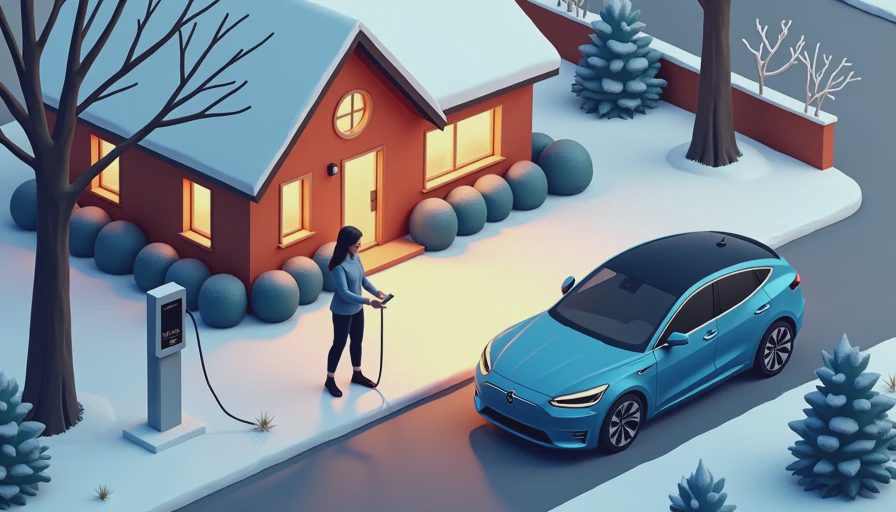
What Different EV Owners Should Expect
A compact EV with a smaller battery may feel winter losses more sharply because each lost mile represents a larger share of the total range. A long-range crossover with a heat pump and a substantial battery can be more forgiving, although its larger frontal area may increase highway consumption. Dual-motor all-wheel-drive models offer excellent traction, but using more motors and carrying more hardware can affect efficiency.
Battery age matters as well. A well-maintained older EV may still serve beautifully, but its original usable capacity can decline over time. If a vehicle has already lost 8% to 12% of its warm-weather capacity, winter operation starts from a smaller base. That does not make the car a poor purchase; it simply makes a thorough battery-health check valuable before buying a used example.
Luxury performance EVs illustrate the tradeoff clearly. A Porsche Taycan or Audi e-tron GT delivers remarkable acceleration, composed handling, and a deeply engineered cabin, but enthusiastic driving consumes energy quickly. In winter, a collector or enthusiast should enjoy those cars without pretending that a fast mountain run will match an economy-minded commute. Character remains the point, but planning keeps the experience pleasant.
A Simple Winter EV Road-Trip Checklist
The night before departure, charge to the level recommended for the trip, confirm tire pressures, and check the weather for wind, precipitation, and freezing temperatures. Set a departure time so the car can precondition while connected. Pack a charging backup plan, especially in rural areas where the next station may be many miles away.
During the drive, use moderate freeway speeds and avoid carrying unnecessary weight. Select an efficient drive mode if the vehicle offers one, but do not sacrifice visibility or defrosting for a few extra miles. Keep regenerative braking settings in mind when the battery is cold or roads are slick. Smooth acceleration and early planning preserve energy while also improving winter control.
If the display shows a lower estimate, do not panic. Range predictions respond to recent driving conditions and can change after the battery warms or the route becomes slower. The key is to treat the gauge as an estimate, maintain a realistic reserve, and use navigation-based charging suggestions when available.
The Collector’s Perspective on Winter EV Ownership
Some enthusiasts still approach EVs as appliances, but that misses the mechanical story. These cars have their own rituals: the quiet pre-drive warm-up, the soft whir of battery conditioning, and the immediate, seamless response that makes a wet corner feel composed rather than dramatic. Winter exposes the engineering more honestly than a showroom floor ever can.
The best response to ev range loss in winter percentage is not anxiety or denial. It is preparation: precondition the car, protect the battery, slow down when the route demands it, and know where the next charger lives. For a daily driver, those habits can make cold-weather use nearly routine. For a performance EV, they preserve the part that matters most—the confidence to enjoy the drive.
From behind the wheel, what stays with you is not the number printed on the window sticker. It is the way the car responds when the road turns cold, dark, and unfamiliar. Understand its winter behavior, and the electric story becomes richer rather than smaller.