There is something almost theatrical about the Ford GT Mk IV: the stretched tail, the enormous rear wing, and that low canopy sitting over a machine built for closed circuits rather than morning errands. Search for the ford gt mk iv nürburgring record, however, and the story becomes less tidy. The car is astonishingly fast, but Ford has not published a verified Nürburgring Nordschleife lap record for this track-only special. That distinction matters, especially in an era when a dramatic video thumbnail can become accepted history overnight.
Every car has a story. Here's this one. The Mk IV is the final, most extreme chapter of the modern Ford GT program, created by Ford Performance and Multimatic as a non-road-legal celebration of the GT's racing lineage. It is not simply a Ford GT with more power. Its proportions, suspension, aerodynamics, and driving position were reworked around the demands of serious track use.
What the Ford GT Mk IV was built to do
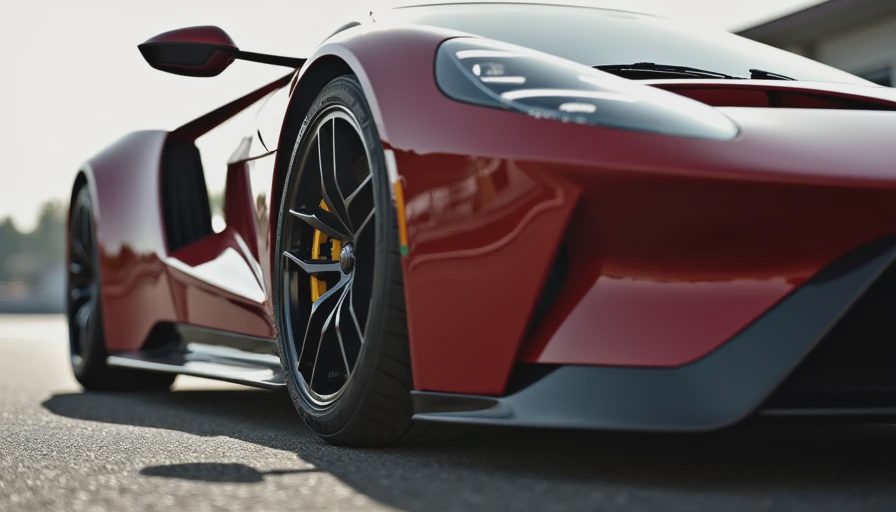
The Mk IV arrived for the 2023 model year with a twin-turbocharged 3.5-liter EcoBoost V6 rated at more than 800 horsepower. Unlike the road-going Ford GT, it uses a racing-style sequential gearbox, a longer wheelbase, and an expanded aerodynamic package. The long-tail body is not decoration. It helps manage airflow over the car and gives the Mk IV a silhouette that recalls the 1967 Le Mans-winning Ford GT40 Mk IV without pretending to be a modern replica.
Multimatic produced only 67 examples, and the original price was about $1.7 million before taxes and delivery costs. That number tells you who the car was for, but it does not fully explain its character. The important detail is that owners were buying a purpose-built track car with factory engineering behind it, not a road car stripped for occasional lapping. There is no license-plate compromise here, no requirement to clear a steep driveway, and no expectation that the air conditioning will matter more than brake cooling.
From behind the wheel, what stays with you is the sense that every surface has a job. The bodywork channels air, the seating position prioritizes control, and the chassis is designed to communicate at speeds that would make a normal supercar feel ornamental. That makes the car fascinating even without a Nürburgring headline.
Is there an official ford gt mk iv nürburgring record?
The careful answer is no publicly verified official record. Ford has not announced a sanctioned Nordschleife lap time for the Mk IV, and the car does not appear in the usual public record conversation dominated by Porsche, Mercedes-AMG, Lamborghini, and other manufacturers that have released documented times with specific drivers, tires, and test conditions.
That does not mean the Mk IV would be slow at the Nürburgring. Quite the opposite: its power, downforce, carbon-fiber construction, and racing hardware would make it a formidable weapon. But the Nordschleife is a demanding 12.9-mile circuit with changing weather, traffic, surface variations, and multiple timing conventions. A private test lap, a simulator result, a magazine prediction, and an officially documented record are four different things.
This is where the ford gt mk iv nürburgring record claim needs context. A car can be capable of a remarkable time without holding a published record. Enthusiasts should resist turning capability into certification. In collector circles, provenance is everything; the same discipline belongs in performance-car journalism.
Heritage Note: the name carries weight
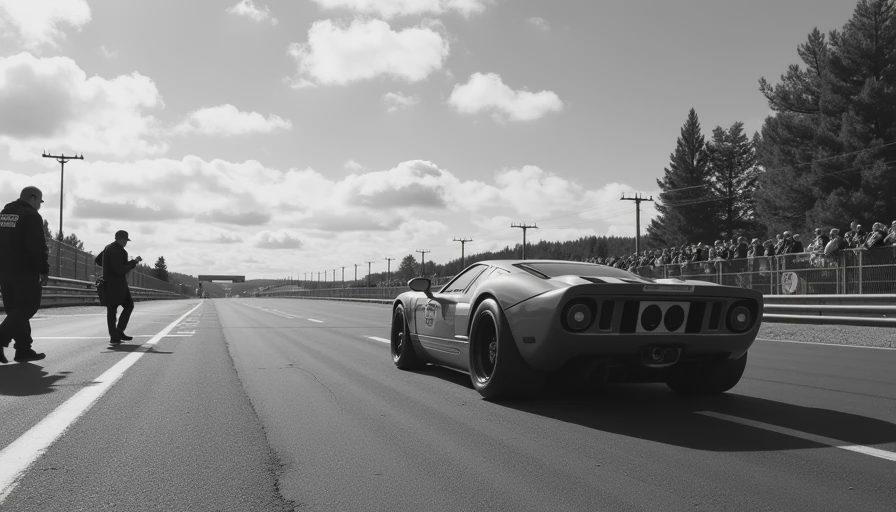
The “Mk IV” badge reaches back to Ford's 1967 endurance racer, the final evolution of the original GT40 program. That car won Le Mans with an American-built 7.0-liter V8 and a body shaped for high-speed stability on the Mulsanne Straight. The modern Mk IV borrows the spirit rather than the exact mechanical recipe. Its carbon structure, turbocharged engine, and computational aerodynamics belong to another century, but the mission is familiar: build the fastest, most focused version of the Ford GT available for competition-style driving.
Which Ford GT actually has Nürburgring history?
The better-known Nürburgring story belongs to the second-generation road-going Ford GT, not the Mk IV. In 2017, Ford and driver Harry Tincknell recorded a time of 6 minutes, 43.22 seconds during the Nürburgring 24 Hours qualifying process. That was a qualifying lap in a competition setting, not a production-car lap-record run, and it should not be presented as proof of a ford gt mk iv nürburgring record.
The distinction is more than a footnote. The 2017 Ford GT was a race-prepared LM GTE car competing in an event environment, while the Mk IV is a limited-production track-day machine. Different tires, regulations, setup priorities, driver objectives, and timing circumstances make direct comparisons misleading. Still, that qualifying performance shows how serious the Ford GT name became when Ford returned to endurance racing.
A collector looking at these cars should ask three questions: Was the lap officially timed? What exact specification ran? And was the circuit configuration the same one used by other record holders? Those questions prevent an exciting claim from becoming an inaccurate caption in an auction listing.
Why the missing record does not diminish the Mk IV
Records age quickly. A new tire compound, a cooler morning, or a more aggressive aero setup can change the leaderboard, while a memorable car can remain important for decades. The Mk IV's value is tied to its total experience: rarity, design, engineering, and a direct connection to Ford's endurance-racing identity.
At Laguna Seca or another suitable private circuit, the car's character would be easier to appreciate than in a headline. The driver can feel the initial turn-in, the stability under braking, and the way downforce builds with speed. Those are qualities that cannot be captured by a single lap number. Even the famous Ford GT road car is more rewarding when its engineering is understood rather than reduced to a top-speed figure.
The ford gt mk iv nürburgring record search therefore leads to a useful lesson. Enthusiasts should celebrate what has been documented and leave room for what remains unknown. If Ford eventually announces a properly measured Nordschleife attempt, it will deserve attention on its own terms. Until then, the car's reputation should stand on verified facts.
A collector's guide to evaluating the claim
When you see a listing or social post promising a ford gt mk iv nürburgring record, look for a manufacturer release, a named driver, an exact lap time, timing officials, circuit configuration, and tire information. Without those details, treat the language as speculation rather than history. Also confirm whether the pictured car is truly a Mk IV; the road-going Ford GT, race GT, and track-only Mk IV can look related while serving entirely different purposes.
For me, that scrutiny makes the car more interesting, not less. The Mk IV does not need an invented trophy to justify its place in the modern performance-car canon. It is a rare factory-built experiment that connects a legendary Le Mans name with contemporary aerodynamic science. The ford gt mk iv nürburgring record may not exist as an official achievement, but the machine itself remains an extraordinary chapter in Ford's story.